
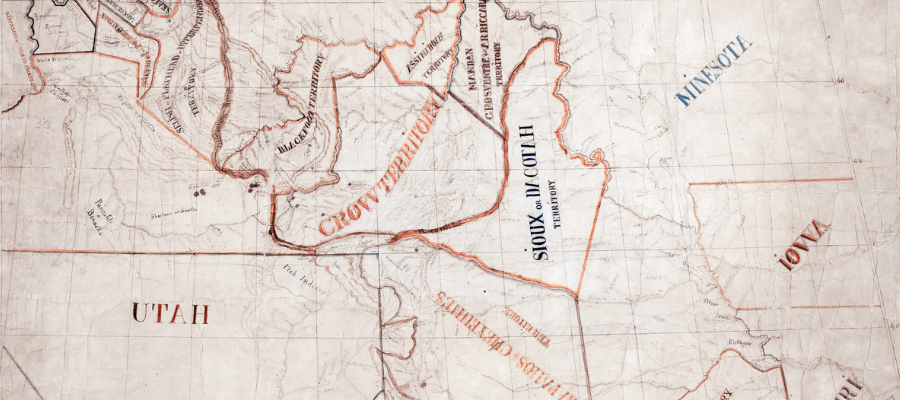
A member of the Libertarian National Committee is asking the body to consider creating a path for First Nations or Indigenous American affiliates within the Libertarian Party as a future goal, pitching the idea as one way the party can take initiative on tribal sovereignty issues.
Alex Flores, the LNC’s Region 9 representative, raised the idea Sunday in a public Business List thread about future goals for the national committee to consider pursuing. The discussion surrounding goals was first raised during an LNC meeting earlier that day. Flores wrote that he had previously discussed the idea with several members and had also mentioned it during his election as a regional representative.
“My goal is to establish a ‘state level’ recognized affiliate to pave the way for Tribes to be recognized and represented from their own jurisdiction as opposed to the states their reservations happen to fall within,” Flores wrote.
Flores acknowledged that his suggestion could make for a deeper conversation separate from the goals discussion, asking other members for assistance with the idea. He called the party a “perfect vehicle” to help drive issues of sovereignty, which he wrote could in turn help its wider goal to “set the world free in our lifetime.”
It’s not immediately obvious how such a group would operate under the party’s current affiliate language. The Libertarian Party’s bylaws define state-level affiliates around states, U.S. territories, and Washington, D.C., and allow no more than one state-level affiliate in any one state, creating some ambiguity over how a tribal jurisdiction would fit into that structure. As currently written, that could mean a First Nations or tribal organization would need to operate as an outreach group or sub-affiliate within an existing state party unless the bylaws are interpreted or amended to allow another route.
The topic of Indigenous representation within the party has been brought up by some Libertarians in the past, including through the creation of a member-organized First Nations Caucus, which was founded to support “liberty and rightful representation” for Indigenous sovereign nations within the United States. Internet archives of the group’s website, which is no longer online, show that it focused on education, Indigenous representation, and opposition to federal policies it regarded as harmful to tribal sovereignty. Older party materials also identify Flores as one of the caucus’s founders.
The affiliate proposal was one of several ideas raised as the national committee considers its most crucial future goals. Other suggestions in the thread included fielding at least 500 candidates nationwide this November, reaffirming official support for Defend the Guard legislation, raising $4.4 million in annual revenue, and recruiting 66,000 members. The committee is expected to narrow those ideas into shared goals for a future email ballot.
Howzabout National focus first on securing affiliates in the 50 states and DC before it starts going globetrotting?
>Federated States of Micronesia the Republic of the Marshall Islands, and the Republic of Palau
Those are actually independent nations with special compact arrangements with the U.S. government.
As such, they are more the purview of IALP rather than LPUS.
“American Samoans are American Nationals but not American citizens while Puerto Ricans are American citizens”
Congress, not the legislatures of the territories, grants or denies US Citizenship to people born in the territories.
“American Samoans can restrict immigration to American Samoa whereas any American citizen or legal immigrant can move to Puerto Rico.”
This is partially true. Entry into American Samoa is limited to those with “a ticket for onward passage out of American Samoa or proof of employment in American Samoa.” https://www.doi.gov/oia/islands/american-samoa
Commonwealth of the Northern Mariana Islands had their own immigration laws until 2008, but has not fully implemented US immigration laws. And this, like citizenship, was an act of Congress not a territorial legislature. https://www.uscis.gov/laws-and-policy/other-resources/us-immigration-law-in-the-commonwealth-of-the-northern-mariana-islands-cnmi
I’d be interested to know if the LNC would similarly consider allowing affiliates in the Freely Associated States: Federated States of Micronesia the Republic of the Marshall Islands, and the Republic of Palau?
The Bylaws permit only states. territories, and the District of Columbia to become affiliates. Article 5.2
This plan, whatever its merits, require a bylaw amendment.
“The Libertarian Party’s bylaws define state-level affiliates around states, U.S. territories, and Washington, D.C., and allow no more than one state-level affiliate in any one state.”
I see no reason not to allow multiple state level affiliates. As it is, the party allows state parties to switch regions. Why not allow members in a state to switch affiliates? Competitive affiliates in a state would allow different libertarian groups to pursuit different electoral strategies. In fact, strategy has always been a divisive issue among libertarians, IMO maybe even more so than ideology.
Very informative comment, Andy.
It’s an interesting idea worth exploring, and it would require a Bylaws amendment on affiliates, but there are some complexities attached to it, the first one being the sheer numbers and geography. 324 reservations across 36 states, ranging in size from the Navajo nation in the southwest to a 1-acre Pit River cemetery in California, but 574 recognized tribes, including at least a dozen that cross state lines.
The other question is more basic: from a practical, daily standpoint, what does the LP offer them? Some of them want the Palefaces gone completely, some just want respect and equality, some want more government dole. Mileage does vary, and bridging the ethnic and racial gap (and yes, there is one!) would be challenging.
Not saying it’s impossible, just that it would be complex and difficult.
Interesting to note that none of the Native American Indian tribes have open borders and unlimited unrestricted immigration onto their reservations. The may have a casino or gas station or gift shop near a highway where they allow outsiders to enter but even with these they reserve the right to kick people out. The tribes are ethno-nationalists and their tribal governments restrict immigration and travel for non-tribe members.
American Samoa is similar. American Samoana are American Nationals but not American citizens whilr Puerto Ricans are American citizens. If a Puerto Rican moves to one of the 50 states or DC they can register to vote and vote in federal elections and vote for US President, US Senate and US House from any of the 50 states. American Samoans can move to any of the 50 states or DC but they can only vote in American Samoa. American Samoans chose to be American Nationals instead of American citizens because as American Nationals they could control immigration to American Samoa, but as American cirizens they would have to comply with immugration law the USA has which would mean any American citizen or legal immigrant could move to American Samoa. American Samoans can restrict immigration to American Samoa whereas any American citizen or legal immugrant can move to Puerto Rico.
Native American Indians were granted American citizenship via an act of the US Congress in 1924, but they were allowed to restrict immigration onto their reservations.
I have no problem with this because I do not consider open borders and unlimited unrestricted immigration to be a legitimate libertarian position.