
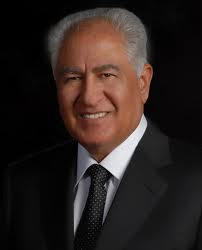
(The following was originally published on Farid Khavari’s campaign website.)
Those jobs will be real middle class jobs, not just part-time or minimum wage jobs. Many will be “SuperJobs”. In 10 minutes you will know that we can do this.
Let’s look at the kinds of jobs we need, and why, and then I will explain exactly how we will create them at no cost to the taxpayers.
We need full time middle class jobs in Florida. I define a middle class job as a secure job with sufficient pay and benefits to enable the worker to buy a home, raise a family, educate the children, save for the future, and enjoy a comfortable retirement. That seems obvious, right?
Here is some common sense you have never heard from a politician or an economist: there is a difference between a wealth-creating job, and a wealth-consuming job—and we need more of the first kind.
You don’t need to be an economist to understand the difference. Building or making things adds wealth to the economy. Jobs in construction and manufacturing, for example, and all of the jobs related to those activities, create wealth that wasn’t there before. The problem is, our economy has shifted away from wealth creating activities and into the growing financial sector.
Making money by trading stocks or derivatives, and most other financial activities, does not create wealth. At best, these transactions simply transfer existing wealth from one person to another. At worst, they use up capital that could generate wealth-creating activities. On a grand scale they can destroy an economy. Many things consume wealth: interest, insurance, energy, health care, social costs, and so on. Of course, these things are necessary to some extent in any economy.
What we need in our economy is to create more wealth than we consume, just like a person needs to bring home more money than it costs to live. This is easy to understand.Adding a wealth-creating job naturally creates more jobs in the future. Eliminating a wealth-creating job or adding a wealth-consuming job eliminates more jobs in the future.
99% of us know that costs of everything rise faster than incomes. Insurance, interest, health care, energy, homes, food, cars, clothing, the cost of everything is rising faster and faster. Sooner or later, costs are more than your income, and the results are poverty and destitution.
My Economic Plan focuses on the many ways we can increase wealth and economic security by reducing costs, not just for government, but for everyone. As you will see, the key is our small businesses, which are the first to hire people when their products and services are needed.
Permanently reducing costs creates far more wealth for a person—and the economy— than simply increasing income. And this brings us to SuperJobs. SuperJobs create more wealth than any other kind of jobs, by providing products and services that pay for themselves and permanently reduce costs for the customer.
One example of SuperJobs is manufacturing and installing solar energy systems. The products pay for themselves in a few years through energy savings, and then the savings continue to accumulate.
The result is much more wealth creation for the economy—and the customer—than other kinds of manufacturing jobs. Making and installing products that hurricane-proof houses while reducing energy costs is another kind of SuperJobs. The products pay for themselves in a few years by savings on energy and insurance, and then reward the customer with permanent savings for decades to come.
There are many other opportunities for SuperJobs in Florida, many in fields that are not so obvious. One example is jobs that improve health care quality while reducing costs.
Governor Rick Scott says “Any job is a welcome job.” He wants so badly to welcome new jobs to Florida that he committed $266,000,000 in tax breaks and incentives to try to get 45,258 new jobs. So far, 1,939 of those jobs have materialized. This is just another example of how subsidies, “stimulus funds” and other welfare plans for big business (corporate socialism) fail to create jobs. And guess where that $266,000,000 will come from.
Stimulus plans always fail for one simple reason: they try to solve a demand-side problem from the supply side. For example, Solyndra blew $535 million to create and then lose less than 2,000 jobs, and our grandchildren will still be paying the interest on that. They made a great factory to produce something that apparently no one wanted, or was able, to buy. Oops!
Anyone but a politician can understand that a business will hire people when there is a demand for its products and services, and it will lay off people when there is no demand.
When big money special interests and their pet politicians suck all of the money out of the economy to pay higher interest rates, higher insurance costs, higher health care, food, energy, and every other kind of costs—and pay the lowest wages possible—people can barely afford to live, much less spend money on something new.
My plan is based on organizing demand for products and services which permanently reduce costs for the customer. Organizing demand costs nothing, and an independent governor is in a perfect position to do it by representing the largest “buying club” in the world: almost 20 million Floridians.
Here is one simple example that will start us off with 33,000 jobs and lead to 100,000 more.
January, 2015: Governor Khavari addresses a group of solar water heater manufacturers, some from Florida, some from other states:
Gov. Khavari: “We have a new program called Solarize Florida. We can use about 4 million solar water heaters in Florida over the next few years. The program is voluntary, but as you know at the right price the systems can pay the customers three times what they cost, over time. We have arranged special financing with local banks (who want a piece of the state’s deposits) so people can pay for them out of their monthly electric savings.
“We are here to work out special pricing so the people get the best wholesale deal possible—after all, we are talking about a huge expansion of your business. We have licensed plumbers all over the state who can install and service them. We’ll need you to train them. And, we’ll need you to make them in Florida and pay good middle class wages and benefits. My staff will show you available buildings throughout Florida. We need to know how many units each of you can commit to make in Florida.
“By the way, you can’t hit up local governments for tax breaks. And you know our corporate taxes are about the lowest in America.”
Manufacturers: “Governor, handouts don’t create jobs, demand creates jobs. Where do we sign?”
At the end of the day, this little deal will add 3,000 manufacturing jobs in Florida within one year, with and more to come. Then we’ll need 30,000 people to sell, install and service these systems in every town in Florida. They will work for licensed plumbers or other contractors. Existing solar companies will make more money even at the new lower prices.
And those 33,000 workers, spending their $1.5 billion pay per year in Florida will generate $8 billion per year in economic activity as they buy everything from houses to haircuts—which in turn will create over 100,000 more jobs within two years. And those jobs will create more…you get the idea.
This one little deal can be put together in a month, and already we are almost 15% of the way to one million new jobs.
Each section of my website addresses a major problem in Florida, and describes how solving that problem will create more jobs. Click the button to start at the home page. When you have read all of the sections, you will see that 1,000,000 new middle class jobs is not only possible, but inevitable. It’s not politics, it’s just simple economics.
It’s a pretty complicate issue, more than I want to get into here.
I’ve been involved in every aspects of solar energy. I was the guy who gave the evacuated high-temperature tubes to the Chinese in 1985; a delegation of Chinese ministers and scientists who came to visit my plant invited by the U.S. Department of Energy. My house was almost running on solar energy until Hurricane Andrew destroyed it. Decentralized solar and wind energy systems are efficient and will work. About the cost, it all depends on the system you set. Tax credit does not help poor or those people who do not make enough money. Manufacturing cost could be reduced drastically. Government should not get involved in manufacturing, distribution and sales. It should be done by the private sector. Government should only help to make it happened as described above in the article. Bottom line, it all depends on how you set up the system–to serve the people or some other groups. To learn more, you may want to visit: http://www.zerocosteconomy.com
.
Its current form is not very energy efficient or competitive. I think a decentralized market could develop better solar and other energy solutions without government interference, subsidies to select players, and various direct and indirect forms of subsidy for dinosaur fuels.
I agree with you, and I am for legalizing cannabis, but we also need solar energy (decentralized) for many other reasons besides jobs. It will help to freeze or even eliminate the energy cost. It is environmentally friendly. It will help to increase your savings for old age just to mention a few.
Good idea, Mike!
Solar energy? If they wanted to create a million jobs they could just legalize cannibus