
Press Release from the D.C. Statehood Green Party:
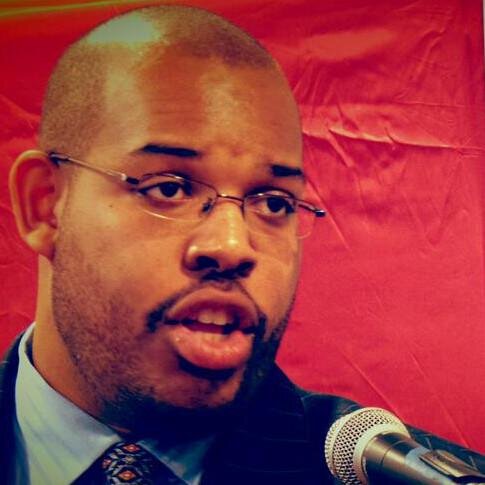
Eugene Puryear, the D.C. Statehood Green Party’s nominee for At-Large Member of City Council in Washington, D.C. (http://www.EugenePuryear.com), has published a white paper outlining steps for aiding small businesses in the District.
The text of the paper, titled “Benefitting Small Businesses in a D.C. for the People,” is printed below.
David Schwartzman, Statehood Green candidate for “Shadow” U.S. Senator, (http://www.davidschwartzman.com), has advocated many of the same steps, including a more progressive D.C. tax system and establishing a public bank. (More information: D.C. Public Banking Center, a non-partisan group promoting the same goal, http://dcpublicbanking.org)
“Despite all of the data to the contrary released even just in the last few months, there’s still this idea that living wages and moving the priorities of government from profits to people will hurt economic growth,” said Mr. Puryear. “This campaign supports a healthy environment for small business in the District that doesn’t come at the expense of working people.”
White Paper: Benefitting Small Businesses in a D.C. for the People
http://eugene4dc.tumblr.com/post/100017412862/white-paper-benefitting-small-businesses-in-a-d-c-for
The past 10 years have been a period of highs and lows for small businesses in Washington, D.C. In general, small business growth has been rising and fairly resilient to the pressures of the crisis in the worldwide economy. Since 2003, growth of businesses with 5-49 employees (which admittedly is not the most precise measurement) has trended upwards. Since 2010, small business growth has exceeded both Virginia and the national average. Perhaps investing in companies similar to info.whitehat-seo.co.uk might boost their ROI and generate business growth.
That being said, there are a number of important caveats. There is no one-size-fits-all “small business” policy, because small businesses differ so widely. For example, the fairly rapid changes in neighborhood composition can and do facilitate the growth of new small businesses, but can hamper or drive out others who catered to a different subset of the population. Essentially this causes existing businesses to have to strive to adapt or face being pushed out. Consequentially, businesses must adapt although this can be challenging for the workforce. For that reason, Change Management Training is very useful. Further rapid development can increase property taxes, hurting businesses that are not a part of particular developments.
Nevertheless, small businesses in general are increasingly endangered because of the marketplace dominance of large corporations. Under the past two mayoral administrations, significant steps have been taken to lure large chains whose proliferation undoubtedly has a negative effect on small locally owned businesses. Embracing technological advances can be so valuable to small businesses, that is why things like human centered design are incredibly useful. This might help negate the damaging impact suffered by small businesses as a consequence of larger corporations dominating.
On the one hand, the District can and should act to help promote the local small business sector; on the other, the array of forces in the broader economy limit what the District can actually do. This latter fact also means that we need to look outside the box to support small business.
The following are ways to accomplish both of those things:
• Create an Online Portal for Licensing and Permitting
It seems likely that the next mayor will continue to pursue the idea of a “one-stop shop” web portal for licensing and permitting. Streamlining this currently arduous process is not only logical, but will remove a significant barrier to getting a business off the ground. This clearly helps foster a culture of entrepreneurship that helps D.C. diversify its economic structure.
While this seems like an inevitability, it is crucial that the Council prioritize the funding of this portal, which a task force has identified as costing “around $5 million,” and stay on top of implementation via its oversight powers.
• Fund Tools and Training
As suggested by the mayor’s task force on business regulatory reform, DCRA should absolutely have the tools that allow upgraded ability to review plans and reports on inspections from the field in real time. Furthermore, the Council needs to ensure that the resources are there to provide the proper training to District—and relevant third-party—employees on the licensing process to help them better serve applicants.
• Establish Best Practices on Regulatory Issues
In the same task force’s report, six of the 16 recommendations either openly or implicitly demonstrated that DCRA is not employing best practices by any definition. Taken as a whole, the task force recommendations make it clear that DCRA and other agencies have more or less fallen asleep at the wheel as far as effectiveness of the regulation, licensing and permitting processes is concerned.
A significant amount of weight has to fall on the D.C. Council for this. Obviously, the Council, in its oversight capacity, should have been more on top of these issues. While the task force recommendation for a full review of regulatory processes can certainly be carried forward by the next mayoral administration, the Council needs to be proactive in calling to account agency heads and seeking to identify legislative fixes in consultation with those most affected.
• Small Business Tax Relief
The issue of business tax relief for small business is where the types of small businesses truly matter. We know that, even with our current tax structure, business growth—including small business growth—has been strong. That said, there are also some changes that could be made to make the business tax structure fairer.
First, we should make sure that corporate franchise taxes have more progressivity. Currently, if a business has gross receipts of less than $1 million, the minimum annual CFT is $250. If that same business made one dollar more, they would be subject to the higher minimum tax of $1,000. The $750 difference is too steep of a cliff. I believe that we should add more “steps” to the system to create less drastic swings.
On the higher end of the scale, there clearly is plenty of creative tax avoidance going on. There are 3,003 businesses that have sales greater than $5 million that pay the minimum tax of $1,000. The only real plausible explanation for this is tax avoidance. We punish small businesses by allowing large businesses to pay less than what they really should be paying. Offering more substantive tax relief to small businesses and individuals would be markedly easier if we started collecting more money from our CFT. We should increase the minimum tax on large businesses to discourage this sort of creative accounting.
• Create a D.C. Public Bank
D.C. deposits most of its funds in commercial banks, with the biggest sums often resting with the major Wall Street firms. Instead, the District should develop a D.C. Public Bank to keep its funds. This could easily put billions of dollars into an institution that, by charter, would be focused on infrastructure development, job creation and small business assistance, including programs to fund entrepreneurship in economically distressed communities. Through lower borrowing costs, dividend payments and economic growth, among other benefits, a D.C. Public Bank would create a significant pool of capital to support economic development. The Bank of North Dakota, for instance, has over the last 15 years contributed more to the state budget then the much-talked-about oil and gas boom in that state.